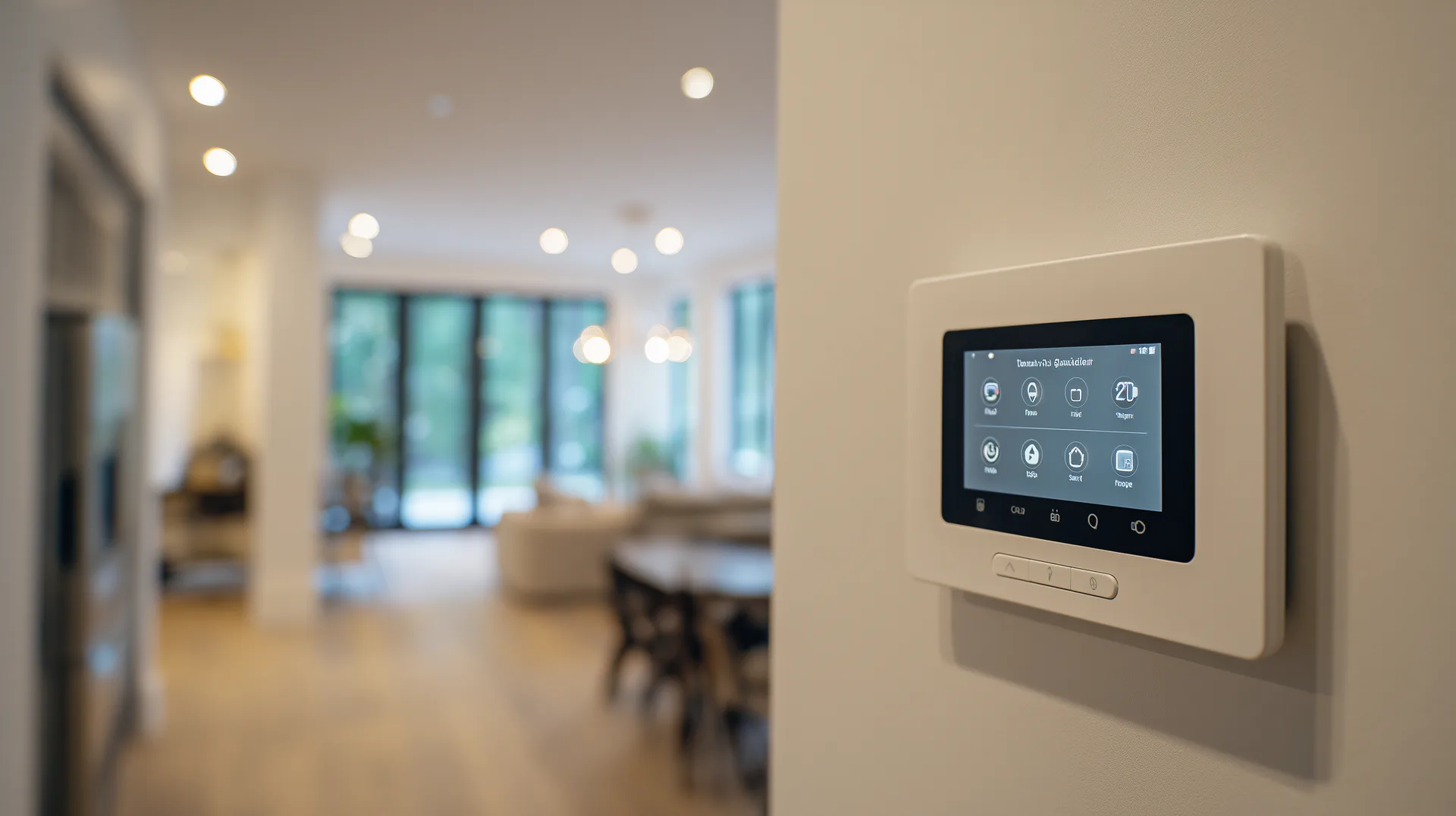
The model home has a tablet on the wall that controls the lights, the thermostat, the blinds, and apparently the front door. A small sign says "Smart Home Technology Included." You imagine yourself living in the future.
Then you move into your base-model home and discover that "smart home technology included" meant a Wi-Fi thermostat and a video doorbell. The tablet was an upgrade. The automated blinds were an upgrade. The integrated lighting system was an upgrade. Everything that made the model feel like the future was an add-on.
Let us separate what matters from what is marketing.
What Most Builders Include Standard
The baseline "smart home" package in new construction typically includes a smart thermostat (often Ecobee or a builder-grade equivalent), a video doorbell (Ring or similar), and sometimes a smart lock on the front door. A few builders add a basic hub or a voice assistant integration.
This is fine. These are useful devices that you would probably buy yourself anyway. Getting them pre-installed and integrated into the home's systems saves you an afternoon of setup.
But this is not a smart home. This is a home with three smart devices.
What is Worth Upgrading: Structured Wiring
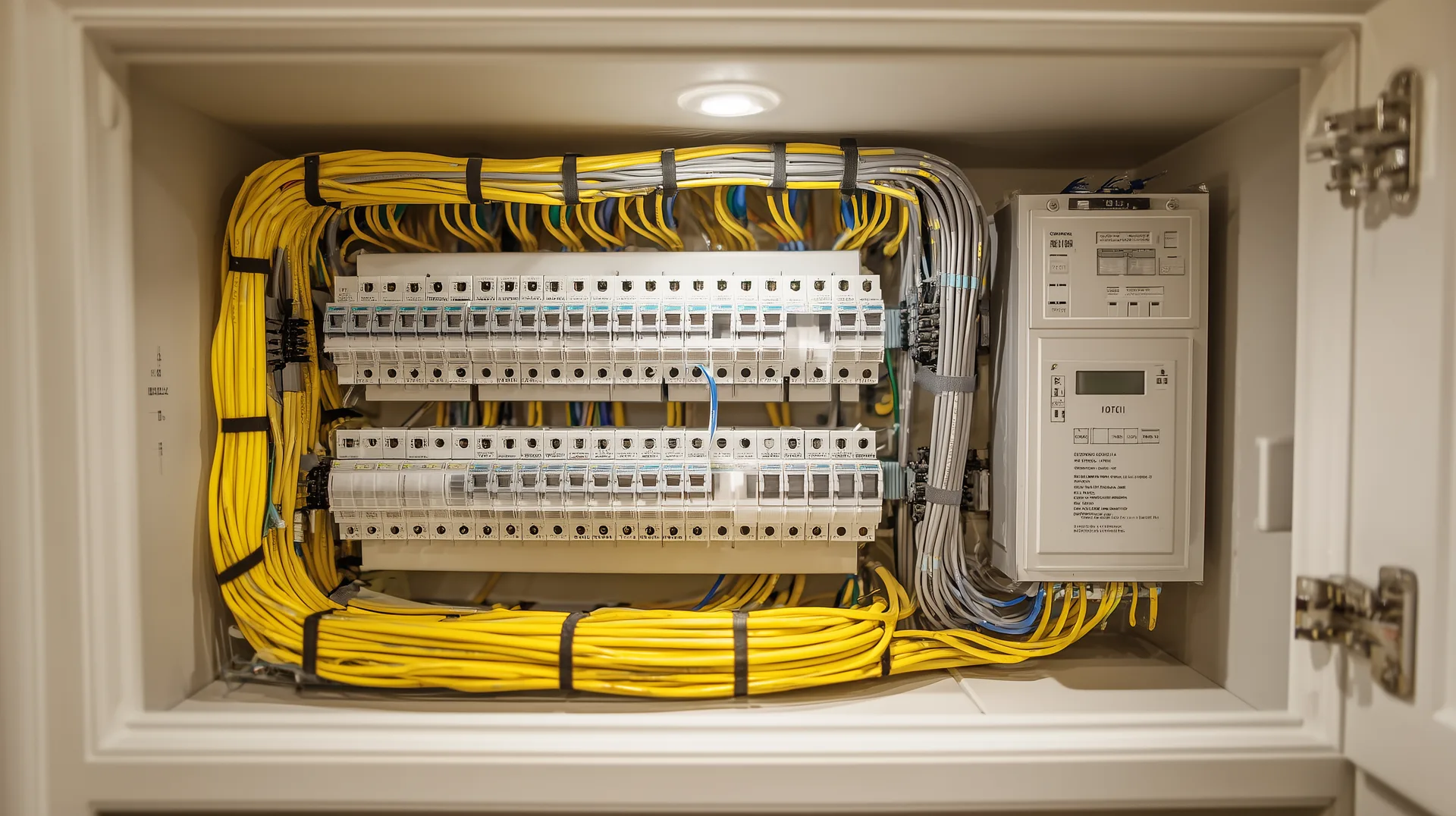
If there is one smart home upgrade that actually matters, it is structured wiring — also called a home network panel or media panel.
Structured wiring means every room has Cat6 Ethernet drops, coaxial connections, and sometimes pre-wired speaker locations, all running back to a central panel in a closet or garage. This gives you hardwired internet throughout the house instead of relying entirely on Wi-Fi.
Why does this matter? Because Wi-Fi is convenient but unreliable for things that need consistent bandwidth — home offices, gaming, streaming on multiple devices simultaneously, security cameras. A hardwired connection is faster, more stable, and more secure.
Adding structured wiring after the home is built means cutting into drywall, fishing cables through insulation, and patching everything back up. It costs three to five times more as a retrofit than as a build-time upgrade.
If the builder offers a structured wiring package, seriously consider it. It is usually $1,500 to $4,000 depending on the home size and number of drops.
Pre-Wired Speakers and Ceiling Prep
If you think you might ever want in-ceiling speakers for music or a home theater, get the pre-wire done during construction. The speakers themselves can wait — you can install them years from now. But the wires need to be in the walls and ceilings before the drywall goes up.
Pre-wiring for a 5.1 surround system or whole-home audio typically runs $500 to $2,000 at the builder level. Retrofitting it later costs significantly more and involves a lot of drywall repair.
EV Charging Prep
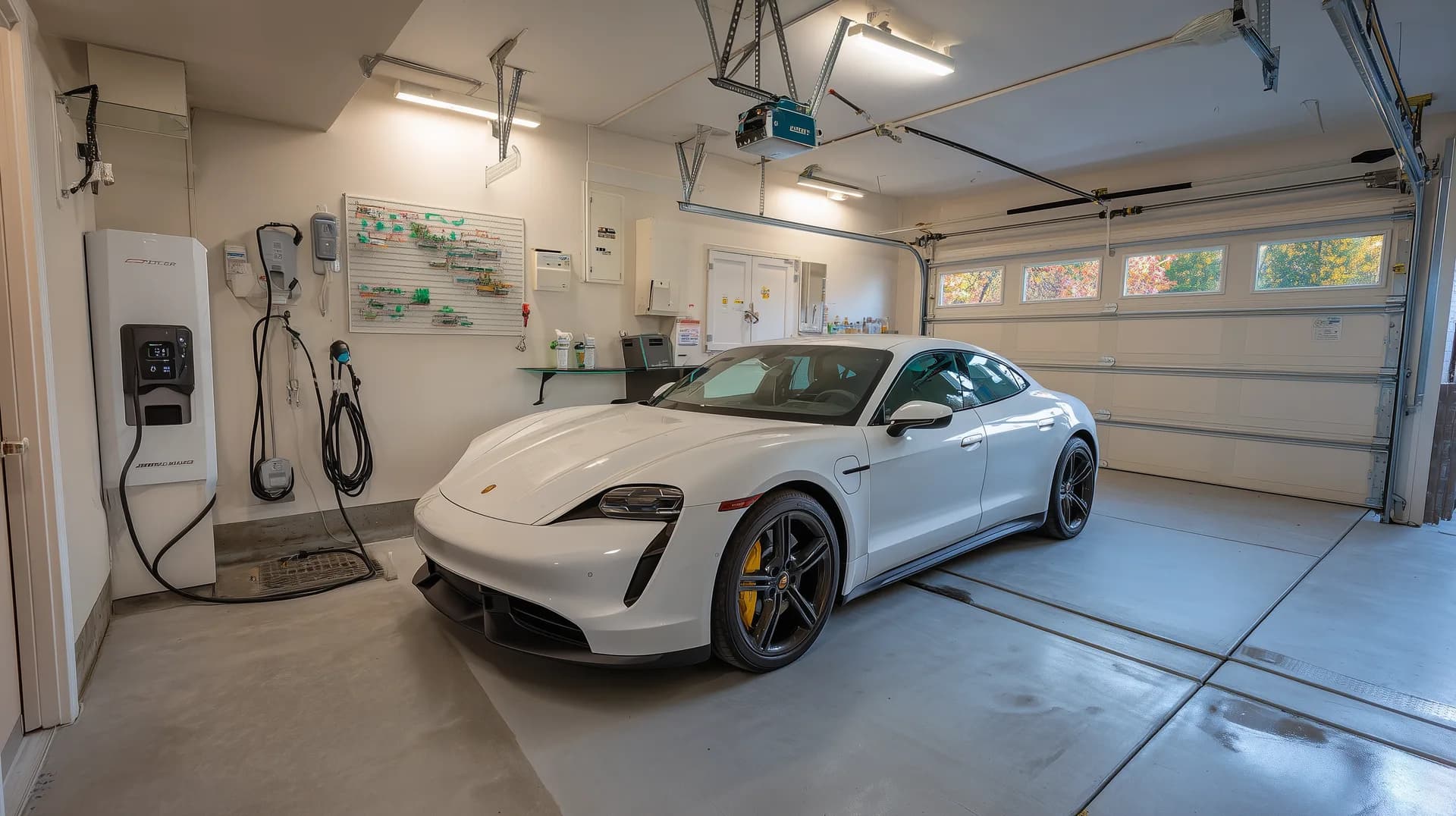
Even if you do not drive an electric vehicle today, there is a reasonable chance you will within the life of this home. Getting a 240-volt outlet or a dedicated circuit run to your garage during construction is cheap — often $200 to $500 as a builder upgrade.
Adding it later means hiring an electrician to run a new circuit from your panel to your garage, which can cost $1,000 to $2,500 depending on the distance and panel capacity.
This is the definition of a "future-proof" upgrade that actually deserves the term.
USB Outlets and Convenience Features
USB outlets in the kitchen, bedroom, and bathroom are genuinely useful. They cost almost nothing as a builder upgrade — typically $50 to $150 for the whole house. Worth it for the convenience, even if USB-C standards keep evolving.
Smart light switches (Lutron Caseta, for example) are another modest upgrade that makes daily life better. Being able to dim your living room lights from the couch without a hub or app is a small luxury that adds up.
What is Marketing Fluff
Here is what to be skeptical about:
"Smart home ready" usually means there is a Wi-Fi network. That has been standard in homes for over a decade. Look for features that go beyond basic connectivity.
Builder-branded smart home apps that only work with proprietary systems are worth evaluating carefully. If the builder's "smart home ecosystem" requires their specific app and does not integrate with Apple HomeKit, Google Home, or Amazon Alexa, you are locked into a platform that may not be supported in three years.
Touchscreen panels that control everything sound impressive in the model. In practice, most people pull out their phone. If the panel costs $2,000 as an upgrade, consider that a $10 phone mount on the wall offers similar functionality at a fraction of the cost.
Automated window blinds are beautiful and work well — but at $300 to $800 per window, they are a significant investment. If the builder offers pre-wiring for motorized blinds without the actual blinds, that is a smarter play. Add the blinds later when you know which windows actually need them.
The Practical Test
For every smart home upgrade, ask yourself: "Will I use this every day, or will I show it off once and forget about it?"
Structured wiring passes that test. Pre-wired speakers pass it if you like music. EV charging prep passes it. USB outlets pass it.
A whole-home automation system that requires a $5,000 hub and a proprietary app? That is a showroom feature, not a living feature.